
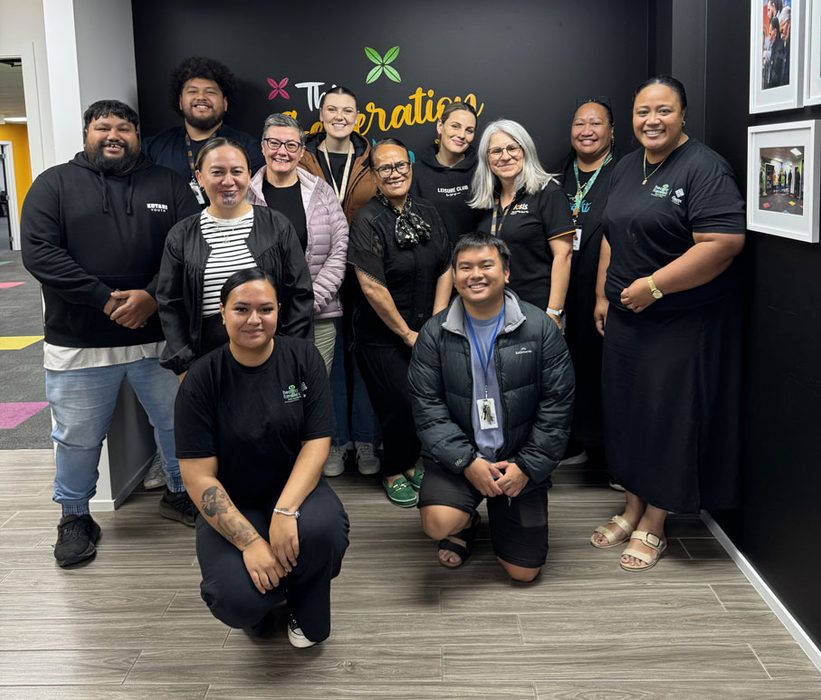
Pictured here: South Auckland school social workers & Healthy Families South Auckland Team.
Kōrero Mai was built for the home. This year it went into eight South Auckland schools to find out whether the kaupapa could hold somewhere else.
Social workers used the conversation cards in their everyday mahi over ten weeks, then told Healthy Families South Auckland what happened.
“A school is not a home. It has its own rules about who asks the questions and who answers them,” says Systems Innovator Veranika Seiuli from Healthy Families South Auckland – The Cause Collective.
“A young person called to the social worker’s office arrives already wondering whether they’re in trouble. So, we wanted to know what Kōrero Mai does in response to that and if so, how does Kōrero Mai support Communication in schools?”
What social workers described was a shift in who held the session. Rangatahi chose the level, chose the card, and decided when to stop. Social workers answered the questions themselves rather than only asking them.
“One Social worker described it perfectly: it’s not me asking, it’s the card asking this question,”. Another said, “it takes away the feeling of, I want to know, I am interrogating you”.
That moves a session from extraction to invitation. It’s not only a wellbeing outcome. It’s a dignity and agency outcome, and in a school setting that distinction matters.
Rangatahi picked up and questions of their own. The emoji cards were named by every single social worker, unprompted, as the standout, the same cards Te Kaha o Te Rangatahi and Kia Puāwai had asked for before the deck went anywhere near a school.
Then something happened that nobody designed for.
Being called to the social worker’s office carries a weight in schools. One social worker described “a boy who always thought he only saw the naughty kids. Another said that before the cards, students think they’re in trouble, with the cards, it feels less like trouble and more like getting help”.
Over ten weeks, rangatahi who had kept those visits quiet started greeting their social workers in hallways. Asking when the next session was. Bringing their friends along.
“One social worker told us she’s not the secret person they see during class anymore,” says Veranika. “That’s a young person deciding it’s okay to be someone who asks for help.
“You can’t design that. But you can change the conditions that make it feel unsafe in the first place.
Kōrero Mai next moves into churches, testing whether the same kaupapa holds in another space where whānau already gather.
Ngā mihi nui to the social workers who trialled something unproven, and to the schools, whānau and rangatahi who made it possible.
If you’re interested in the Kōrero Mai cards and would like to get in touch with the team, please email Veranika at veranika.s@thecausecollective.org.nz