
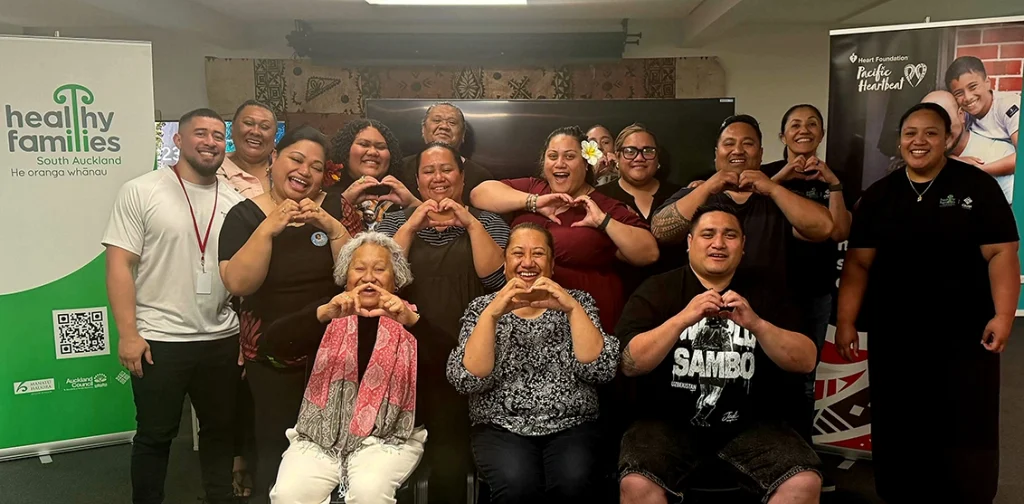
Healthy Families South Auckland is bringing whānau, aiga and partners together to explore what shapes wellbeing and where they can make a difference.
People come to a walkthrough curious about what they’ll see. As they move through it, they start to recognise things they’ve experienced themselves or seen in their communities. They lean in, ask questions and add what they know.
Then the conversation shifts. How can we be part of this?
For Healthy Families South Auckland at The Cause Collective, that shift is a win. It’s a sign that people can see a place for themselves in changing the conditions that shape wellbeing in South Auckland.
Making the system visible
A walkthrough makes it easier to see how an everyday experience connects to decisions made elsewhere. Take something whānau and aiga know well. Accessing support can be hard. Looking at that experience together brings more of the picture into view. Where do people first turn? What happens when one organisation sends them to another? Who has the ability to make that journey easier?
Whānau and aiga bring their experience of what helps and what gets in the way. Community leaders bring knowledge of the relationships and solutions already in place. Frontline kaimahi see where things get stuck, and people from partner organisations can identify decisions or practices they have the ability to change.
The innovation is in bringing those perspectives together in a way people can respond to. A walkthrough gives people room to question what they see, add what’s missing and recognise where their efforts could connect.
The wins build as people get involved
One early win is recognition. People see an experience they thought was theirs alone reflected in what others share. Another is connection. A community group and a service provider might discover they’re trying to solve different parts of the same problem. Across our kaupapa, those connections are opening up different ways for people to step in.
Whānau are shaping what we learn. In the Kōrero Mai prototype, 51 whānau from South Auckland took part. What they shared helped us understand what matters to whānau, in their own words.
Practitioners are committing to work together. In Oranga Whakapaka, rongoā and clinical experts agreed to co-design a prototype for type 2 diabetes. The prototype will test how Indigenous and clinical knowledge can work together in practice. The win was getting practitioners whose expertise has often sat in separate parts of the system to agree to design that test together.
What aiga are learning is bringing a new partner into the kaupapa. Through Nourishing Food Systems, Pacific aiga is now in their second round of testing a prototype focused on type 2 diabetes. What aiga shared through testing shaped the walkthrough that Diabetes Foundation NZ attended last week. The Foundation valued seeing and hearing directly from aiga and will now join us in the kaupapa. That’s a progressive win for the mahi. Aiga helped shape what a potential partner could see and hear, and that partner is now stepping in.
The bigger test is what follows. Do whānau and aiga see their priorities reflected in decisions? Does working together change how we support people with type 2 diabetes? Do resources reach the people already leading solutions? That’s how we can see whether growing involvement is leading to systems change.
Making room for more people to lead
The walkthrough is one part of an ongoing conversation through talanoa, wānanga and relationships across South Auckland. Māori and Pacific knowledge and leadership help shape what’s brought into view and what happens next. Our role is to connect people who want to contribute with the community leadership, decisions and resources that can move an idea forward.
A movement grows when people see that what they know matters and there’s something they can do with others. People come, they lean in, and they find a way to take part. Each time that happens, more of us can help shape a South Auckland where whānau and aiga can thrive.