Healthy Families South Auckland, along with its Health Coalition Aotearoa partners, held its fifth community engagement with local South Auckland groups and champions in August.
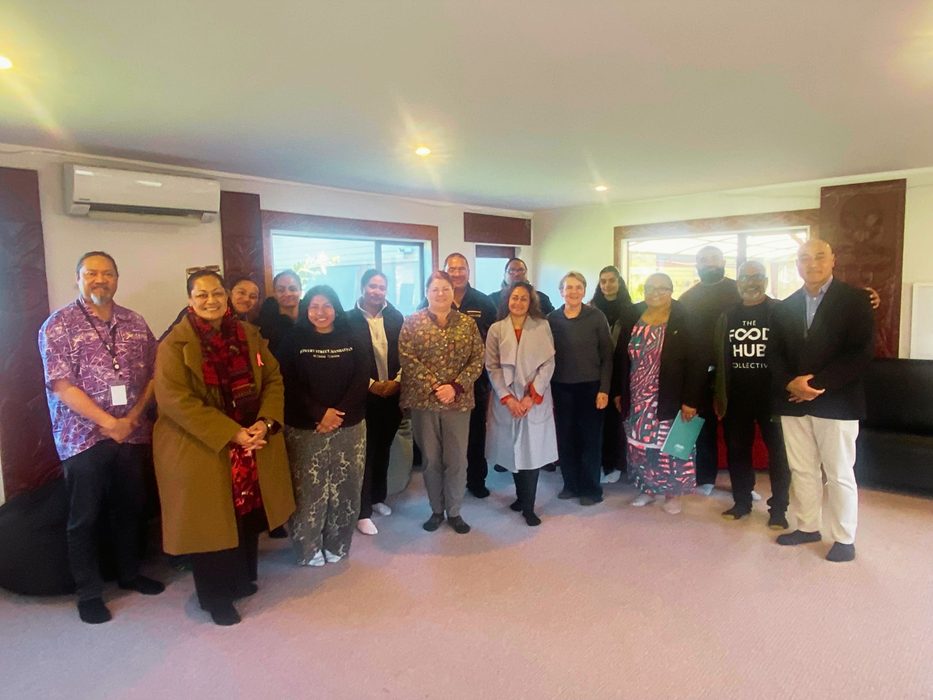
It was the final hui on food systems in Māngere, held at Papatūānuku Marae and facilitated by Healthy Families South Auckland and Moana Connect. Eighteen participants attended, including Manukau Ward Councillor Lotu Fuli, alongside representatives from City Mission, Kahoa Tauleva Trust, Ministry of Social Development, The Food Hub Collective, as well as Auckland Council’s Sustainable Schools and Community Innovation teams.
The session forms part of ongoing stakeholder community consultations for the Māngere Food Systems project, a Healthy Families South Auckland and Health Coalition Aotearoa initiative that seeks to strengthen local food environments and advocate for policies that give South Auckland communities greater influence over their food systems. Policy change has the greatest long-term impact on food security because it shapes the systems, environments and resources that influence food access for entire communities, creating sustainable change at scale.
Building on insights gathered from local stakeholders, whānau and community organisations, the recently released He Kai Kei Aku Ringa report identified significant systemic barriers to accessing healthy food.
At the same time, the report highlighted the strength of community-led solutions already underway, including food hubs, cultural food knowledge programmes and local food sovereignty efforts.
Participants in the hui supported the project’s five recommended policy priorities: strengthening local food systems, building community capacity, strengthening school food systems, regulating the industrial food system, and reducing poverty and the cost of healthy food.
Healthy Families South Auckland Lead Systems Innovator Ray Tuala says a key outcome of the hui was a shared commitment to work more collaboratively, including better sharing and coordination between stakeholders.
“We got more insights from some kai providers who brought up the challenges they’re facing, such as the loss of growing spaces through urbanisation and increasing housing density,” he says.
“There were also some great kōrero around innovative opportunities to optimise land space, whether growing crops vertically or collaborating with private landholders such as marae, churches and schools for food production.”
Healthy Families South Auckland and Moana Connect also provided updates on recent advocacy efforts including a deputation to Auckland Council’s Policy, Planning and Development Committee, the release of the community and foundation reports, and the inclusion of community representatives onto the project’s steering group.
Looking ahead, the focus remains on securing sustainable funding, strengthening partnerships across local and central government, building community capacity for systems change, advancing kai security and kai sovereignty initiatives, and ensuring community voices continue to lead the kaupapa through strong engagement with existing networks.