By Julio Bin, Healthy Families South Auckland/Auckland Council.
Aotearoa New Zealand produces enough kai to feed more than six times our population. We feed tens of millions overseas; however, here at home far too many people struggle to access enough food, let alone quality, culturally appropriate healthy kai.
Data recently published by The Salvation Army shows that food insecurity worsened sharply in 2024, with the proportion of households with children reporting some level of food insecurity reaching the highest level in over a decade. More than half of Pacific children face food insecurity. One in four children live in households where food sometimes or often runs out.
Despite Aotearoa’s food growing capabilities, inequitable access persists within the country. Reliance on imported food can make us vulnerable to global supply chain shocks, such as those seen during COVID-19. Population growth, expansion of urban areas, climate change and economic factors also exacerbate existing food insecurity.
A lack of quality, healthy kai is linked to poor health outcomes and compounds many existing health conditions. Better diets mean not only healthier and longer lives for New Zealanders, but also downstream benefits for healthcare costs, productivity and education.
Reimagining and prioritising our food system while addressing food insecurity is both a moral imperative and a necessity to improve resilience, health equity, the health of our environment and community wellbeing.
Communities pushing for change
Across the motu, from small rural farms to urban mara kai, communities are blending indigenous knowledge with fresh innovation to build local food resilience.
Restoring traditional crops and sharing seeds, co-creating community food hubs with local whānau, integrating mātauranga Māori practices are some examples of what’s possible and models for a broader movement that can influence systemic change.
Recent survey research shows at the same time, 84 percent of New Zealanders support government measures to reduce the cost of healthy food, 73 percent back free school lunches and 64 percent will endorse a sugary drinks tax if revenues fund healthy eating programmes.
These figures confirm that New Zealanders want action, and they expect it now.
The role of government
While communities are doing their part, local initiatives alone are not enough. Public-private-community partnerships are essential to scaling and sustaining innovation. This means:
- Policy Alignment: Move beyond siloed strategies (food safety, trade, health) and adopt a holistic and cohesive food policy that addresses equity, sustainability, and resilience in one document.
- Resource Flows: Redirect a portion of export levies and agricultural subsidies to support community-led initiatives like food hubs, regenerative farming practices, and urban mara kai.
- Regulatory Support: Simplify land-use rules for micro-farming and community gardens and incentivise supermarkets to source locally grown produce.
- Capacity Building: Support community-led food enterprise, invest in training for Māori and Pasifika food practitioners, ensuring food culture and indigenous knowledge remain at the heart of system change.
A strategic movement
Rooted in the understanding that food is more than calories, it is culture and identity, community connection, social cohesion and fundamental to health and wellbeing.
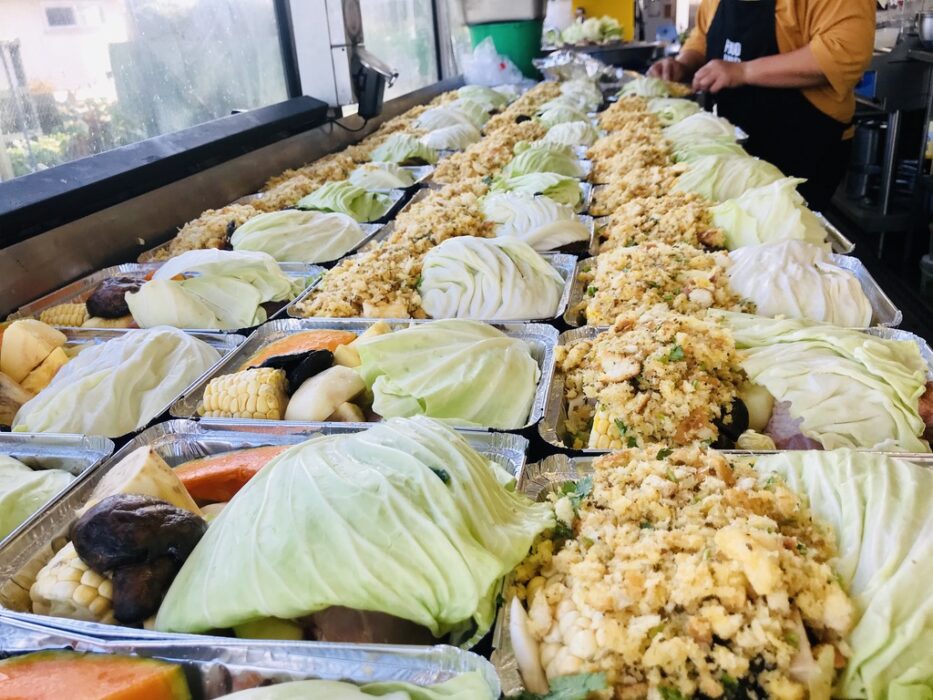
Healthy Families South Auckland at Auckland Council has supported community-led initiatives and systems change approaches like the Papatoetoe Food Hub, the Good Food Road Map, and more recently the Healthy Families NZ Food System Theory of Change – a co-designed framework that clarifies how policy, partnerships, and practice can integrate around shared outcomes.
While the theory of change is not a silver bullet, it helps to create a roadmap, a plan, prompting reflection and the right questions toward a coordinated movement for an equitable, regenerative and resilient food system.
It also outlines how communities can shift from food dependency to food sovereignty, and from fragmented interventions to system-level transformation, supporting whānau, practitioners, and policymakers to reimagine food as a driver of equity and collective prosperity.
A call to collective action
We stand at a crossroads. We can continue to treat food as a commercial commodity measured solely by tonnage and economic value, or we can reclaim food as the foundation of wellbeing: physical, cultural, and ecological. This requires:
Collectiveness: government agencies working hand in hand with community leaders; Determination: long-term planning and investment with intentional focus on equity; and
Action: turning insights, frameworks and goals into lived realities.
In a country where food contributes significantly to economic growth and prosperity, access to healthy and nutritious kai should be regarded as a fundamental right for all New Zealanders and not a privilege.
It is time for policymakers, councils, businesses and whānau to collaborate with urgency and determination to ensure everyone can exercise this right.
We have the resources, the people, the knowledge, and the public will to transform the food system in Aotearoa, but not if we treat food as a private good instead of a common good.
It cannot be the domain of one central government Ministry or one particular sector. This is our moment to work together to grow resilience by sowing the seeds of a food system that nourishes both people and the planet.
*This is an edited version of an article from the same author posted on LinkedIn.