In the recently released Turou Hawiki report, Healthy Families South Auckland shares its vision for a fairer, healthier South Auckland and demonstrates how community leadership and systems change and improve health and wellbeing outcomes. Central to this approach is a simple but powerful question: What part of the system are we trying to shift?
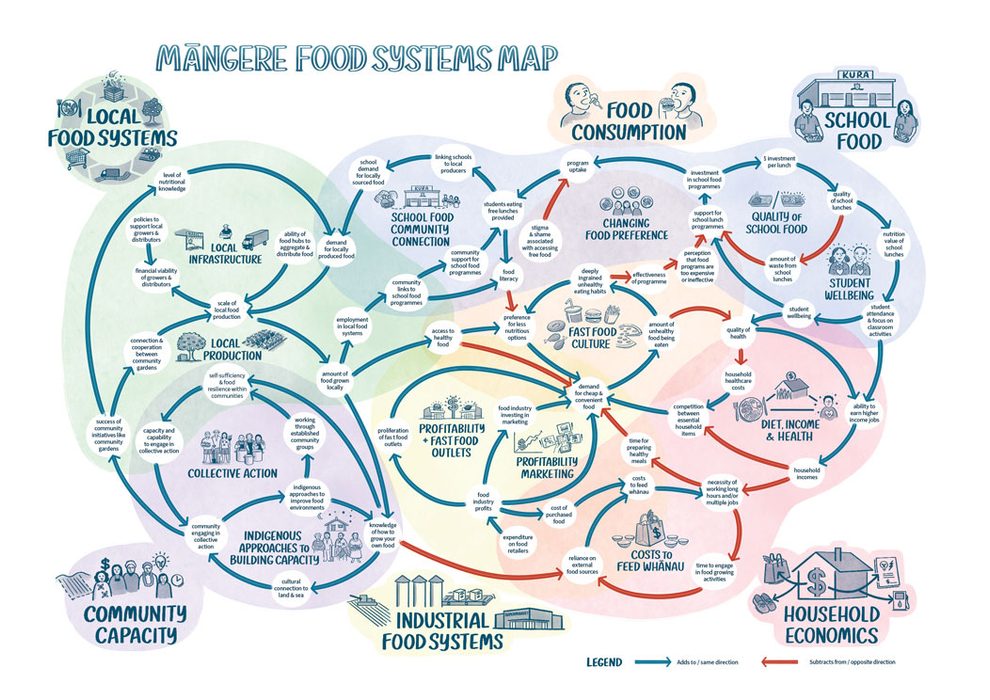
One example of this approach in action is the development of the Māngere Food Systems Map, a first of its kind analysis for Tāmaki Makaurau that brings together community knowledge, lived experience and policy perspectives to better understand the conditions shaping food security in Māngere.
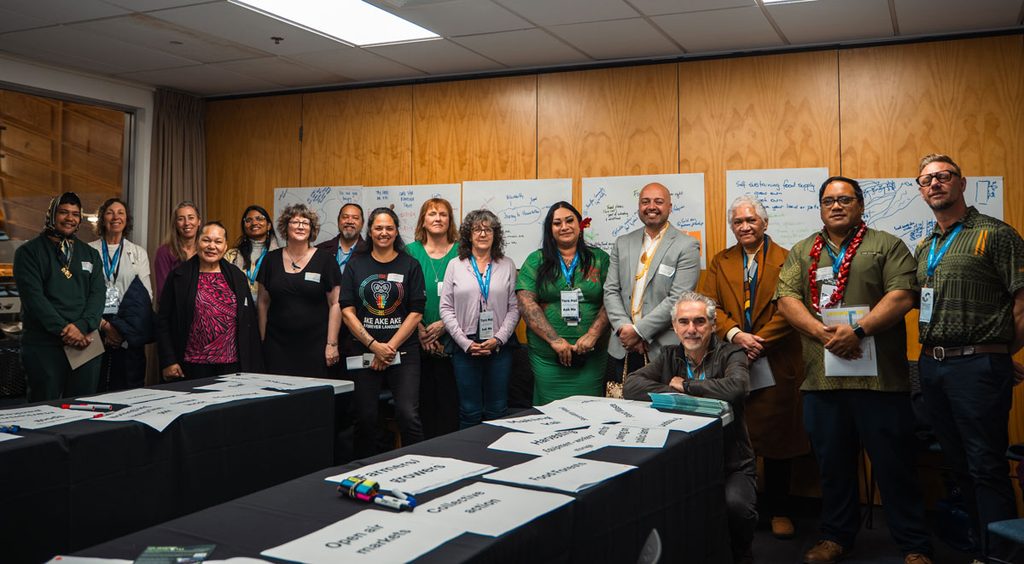
Developed through a partnership between Healthy Families South Auckland, Health Coalition Aotearoa, Toi Tangata, Moana Connect and the University of Auckland, the work reflects a key message of Turou Hawaiki: lasting change happens when communities are partners in shaping solutions rather than recipients of programmes.
The map reveals that food insecurity is not driven by a single issue. It is influenced by many interconnected factors, including household income, food affordability, local food production, school food programmes, food literacy, unhealthy food environments and public policy settings.
By making these relationships visible, the map helps identify where meaningful change can occur and where investment can have the greatest impact.
The Māngere Food Systems Map illustrates our role as a connector between community aspirations and systems-level change. Operating within Auckland Council, our team is uniquely positioned to work across community, local government and policy settings, helping to ensure community voices influence the decisions that shape food environments and wellbeing outcomes.
By creating a shared picture of what influences food security and identifying clear opportunities for action, it helps communities, organisations and decision-makers work towards a future where nourishing, affordable and culturally appropriate kai is within reach for everyone.