
Auckland and São Paulo learning through food systems
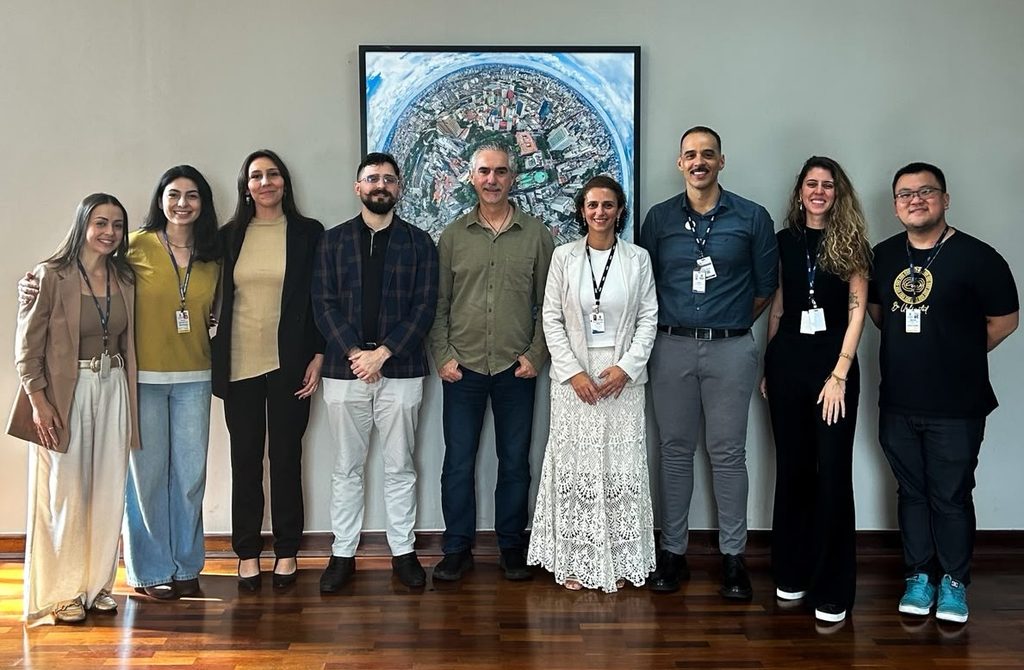
Could the food system become a new form of city-to-city learning, connecting health, resilience, climate and local economies? Recent conversations between Healthy Families South Auckland and São Paulo City Council explored what two cities of very different scales and contexts might learn from each other.
Julio Bin, Lead Systems Innovator at Healthy Families South Auckland recently had the opportunity to explore these questions through conversations with São Paulo City Council’s food and nutritional security and school-feeding teams.
Auckland and São Paulo’s scale, governance, history and social contexts are not directly comparable, yet both face increasingly familiar challenges around food access, health inequity, climate resilience, urban food environments and how cities can support healthier communities.
Two cities. Two sets of strengths.
São Paulo has built an impressive food security infrastructure. Its school-feeding programme reaches more than one million students and serves around two million meals every day. The wider food system includes community kitchens, food recovery, reduced-price food outlets, municipal markets and supply infrastructure.
Auckland operates at a very different scale but brings different strengths: place-based prevention, systems thinking, community leadership and cross-sector collaboration. Auckland also benefits from approaches grounded in mātauranga Māori and Pacific knowledge which recognise the connection between food, health and wellbeing, whenua, relationships and place.
Neither city has all the answers. That is precisely why there is value in learning from each other.
Why food matters
What makes this conversation interesting is that it is not really just about food.
A recent article from the Kings Fund[1] highlighted Brazil and New Zealand as international examples of community-centred approaches to improving neighbourhood health.
Brazil’s Family Health Strategy works through community-based primary care, while Healthy Families New Zealand works upstream (outside clinical services) to influence the environments, systems and conditions that shape health.
Different approaches, but a shared lesson: healthier communities are created far beyond the walls of health services,and food plays an important role in that process.
What we eat, what is available around us, what food costs, how it reaches us, who produces it, what gets procured by public institutions and what happens to surplus food all influence the health and resilience of our communities.
Food systems can provide a bridge between urban policy, public health, climate action, and local economic development.
What could these two cities learn from each other?
For Auckland, São Paulo offers an opportunity to learn from food security infrastructure at a large scale.
For São Paulo, Auckland offers insights into systems change, community-led action and how Māori and Pacific knowledge can inform approaches to food, health and wellbeing.
This is not about copying one city’s model into another. It is about discovering what is transferable, what can be adapted, and what new ideas and innovations emerge when two very different cities learn together.
The bigger opportunity
Cities have long partnered around trade, investment, technology, and climate action. Food systems deserve a place at the table. How we produce, distribute, and consume what we eat impacts nearly every part of urban life.
When we transform our food systems, we strengthen everything else: health, climate, economy, culture, and community.
While an Auckland São Paulo collaboration has not yet been established, these conversations point to the value of reciprocal international learning. The greatest opportunity may not be a formal partnership, but the change for two very different cities to exchange ideas and develop solutions that neither would have created alone.
[1] https://www.kingsfund.org.uk/insight-and-analysis/long-reads/neighbourhood-health-international-exploration