
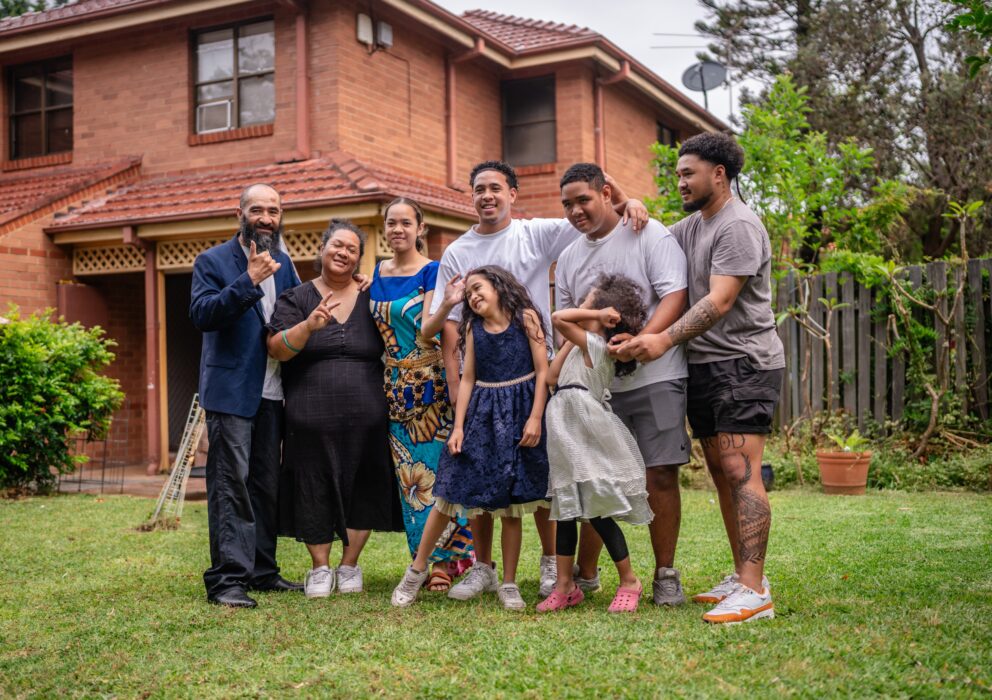
In South Auckland, there’s a quiet truth sitting in many of our homes.
It’s not always loud. It doesn’t always show up in crisis. But it lives in the spaces between our conversations or more honestly, the lack of them.
For many of us, the way we learned to communicate was shaped long before we ever became parents. It was shaped in homes where love was present, but not always spoken. Where survival took priority over expression. Where emotions were felt deeply, but rarely named.
And now, as parents ourselves, we’re being asked to do something radically different to raise emotionally safe, open, and connected young people… without always having experienced that ourselves.
That’s not a small ask. That’s systems change.
The Reality Our Rangatahi Are Living
When we sit with our young people and really listen, not just hear a different story unfolds.
They’re telling us:
- “I want real communication.”
- “When I can’t talk to my parents, I stop trying.”
- “I find it easier to connect with my friends than my own family.”
This isn’t about defiance. It’s not about disrespect. It’s about disconnection.
Many of our rangatahi are navigating complex emotional worlds while also carrying responsibilities beyond their years, stepping into caregiving roles, managing expectations, and learning to read the emotional temperature of their homes just to stay safe.
They’re adapting. They’re resilient. But they’re also telling us, quietly and consistently, “I don’t feel fully seen here.”
And when that happens, they find connection elsewhere. Friends become whānau. Peers become safe spaces. Silence becomes a coping mechanism.
And Then There Are the Parents
Because this isn’t just a story about young people. Parents are in this too.
Parents who are working, sacrificing, doing everything they can to provide.
Parents who want to connect, but don’t always know how.
Parents like Shelley and Junior, who openly say, “Back in our day, mental health wasn’t a thing… but we want something different for our kids.”
There is no lack of love here. But there is a gap. A gap between intention and capability. Between wanting to show up differently, and knowing how.
This Is Where Systems Thinking Matters
If we only look at individual behaviour, we miss the bigger picture. Because this isn’t just about “better parenting” or “more resilient youth.”
This is about systems that have shaped how whānau function over generations:
- Cultural expectations around silence and strength
- Intergenerational trauma and survival patterns
- Shifting roles within the home
- Environments that don’t always support emotional wellbeing
What we’re seeing is not failure it’s inheritance. And if it’s been inherited, then it can be redesigned.
Manaaki as a System Shift
At Healthy Families South Auckland, the work isn’t about fixing individuals. It’s about shifting the conditions that shape behaviour in the first place. Through wānanga, co-design, and walking alongside whānau, something powerful is emerging:
Both parents and rangatahi want the same thing.
- To feel heard
- To feel respected
- To feel safe in their own homes
But manaaki in this space requires us to stretch our understanding. Manaaki is not just caring for our young people.
It’s also caring for parents who were never shown how to communicate in this way.
It’s holding space for their learning, their unlearning, and their discomfort.
It’s recognising that healing is not one-directional it must flow both ways.
Rebuilding the Blueprint Together
What’s powerful about this kaupapa is that the solutions aren’t coming from outside.
They’re being built by whānau, for whānau.